Quality Tested.
Certified. Delivered.
Every tube and fitting we supply passes through a rigorous 15-test quality protocol spanning dimensional verification, mechanical performance, and advanced non-destructive examination — before a single shipment leaves our facility.
Our Quality Control Pipeline
Raw Material
Dimensional QC
Mechanical
NDT Testing
Certified
Quality Control Tests
Dimensional and surface verification performed on every batch before mechanical or NDT testing begins.
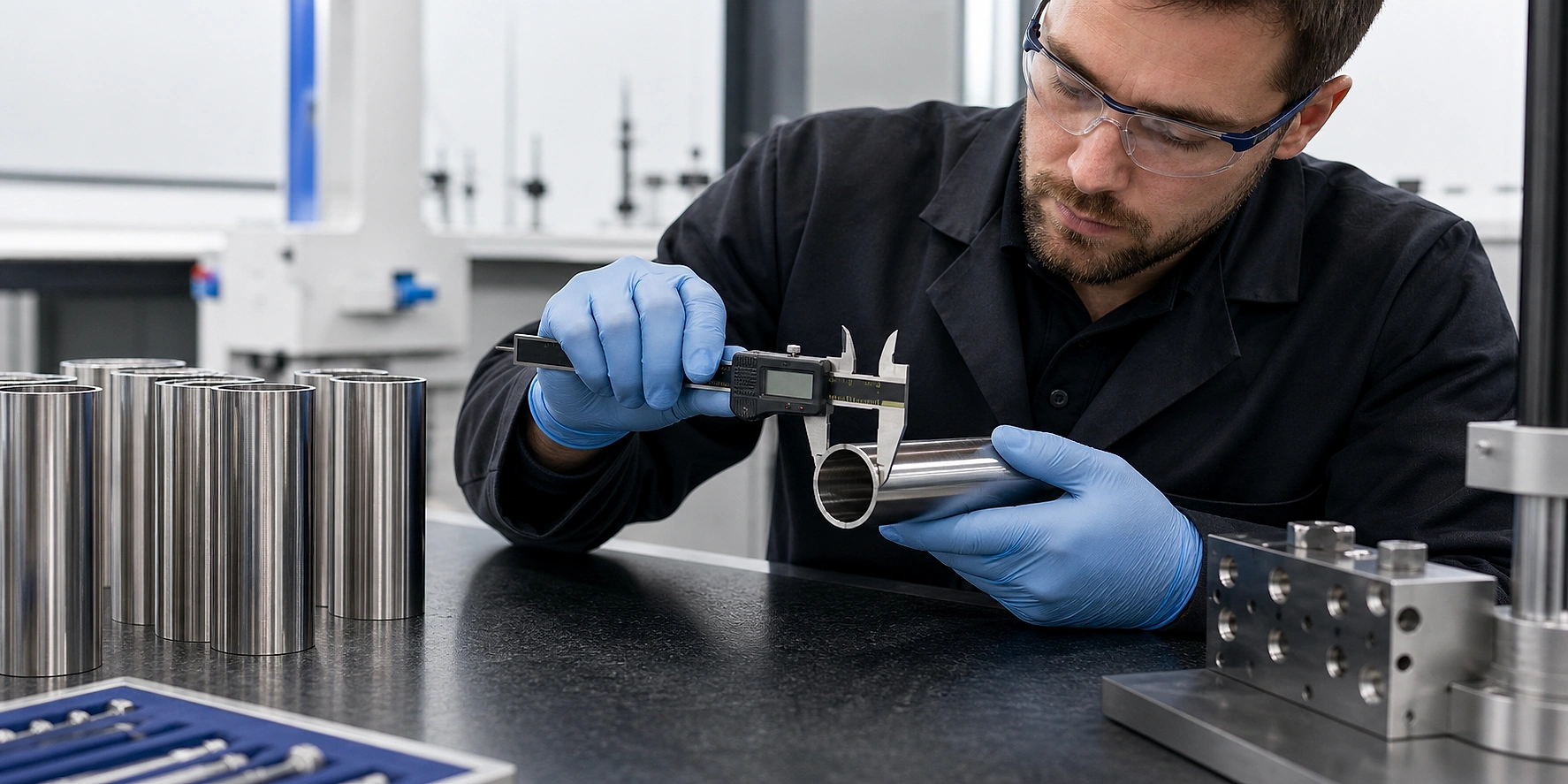
Dimension Check
Precise measurement of outer diameter (OD), inner diameter (ID), wall thickness, length, and ovality against ASTM and EN tolerances using calibrated digital gauges and optical comparators.
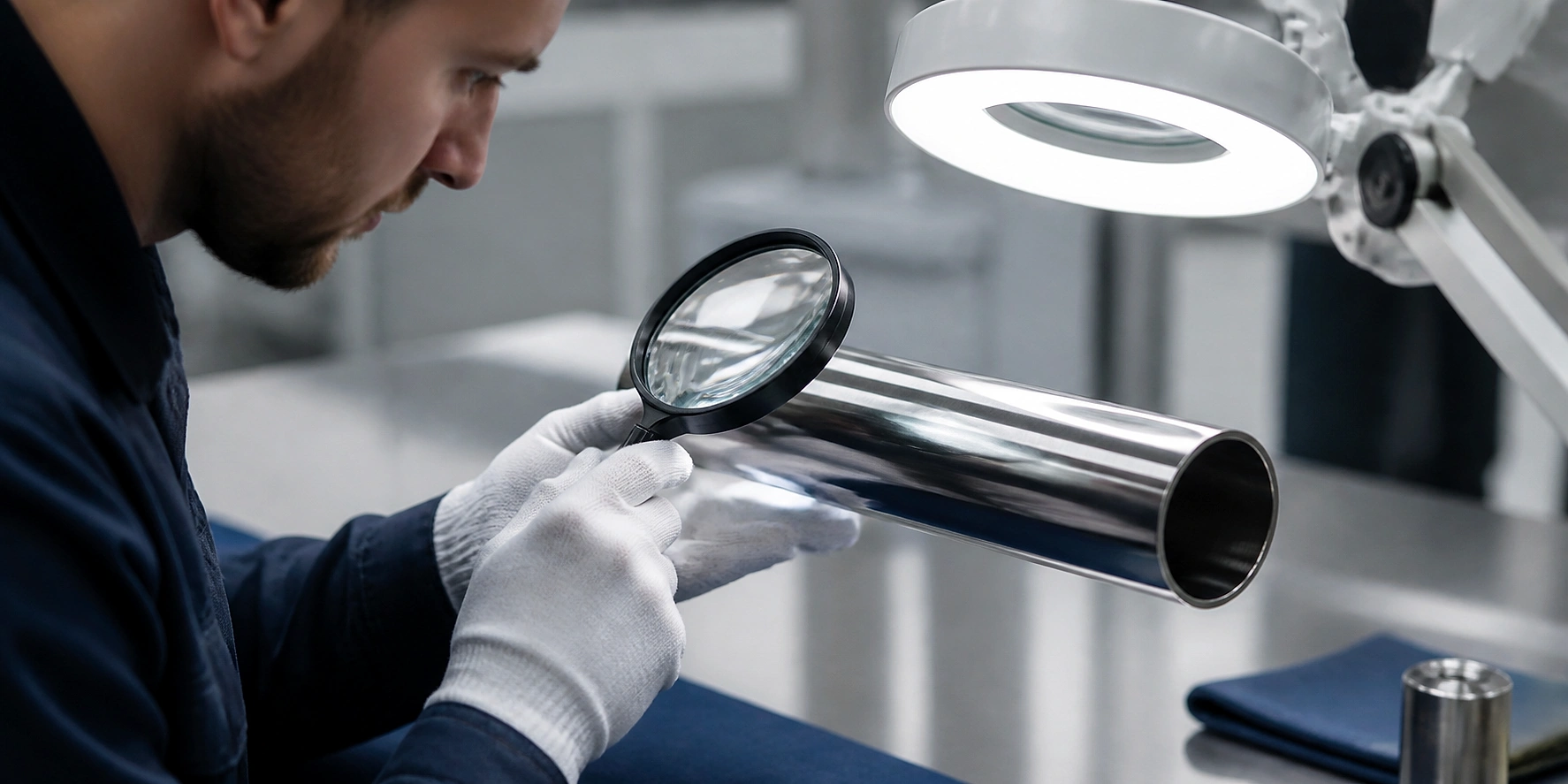
Surface Inspection
Visual and tactile examination of internal and external surfaces for scale, pit marks, ruptures, ID/OD scores, roll marks, and dents. Surfaces must be clean, smooth, and free from any injurious defects.
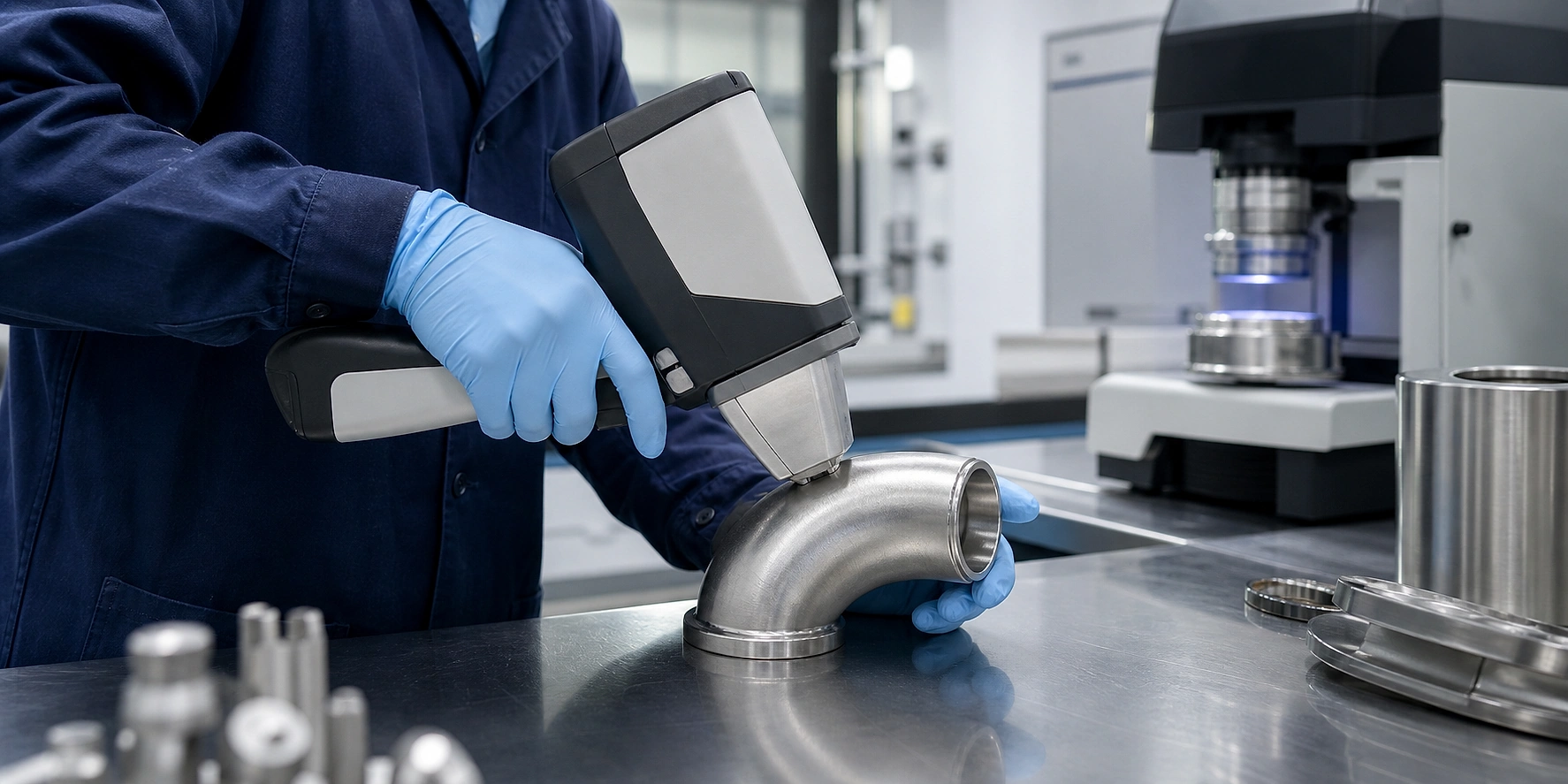
Chemical Analysis
Spectrometric and PMI (Positive Material Identification) analysis verifies the full chemical composition of raw materials and finished tubes against certified mill test reports and ASTM/EN grade specifications.
Mechanical Tests
Physical stress and deformation tests confirming material integrity, ductility, and formability under real-world load conditions.
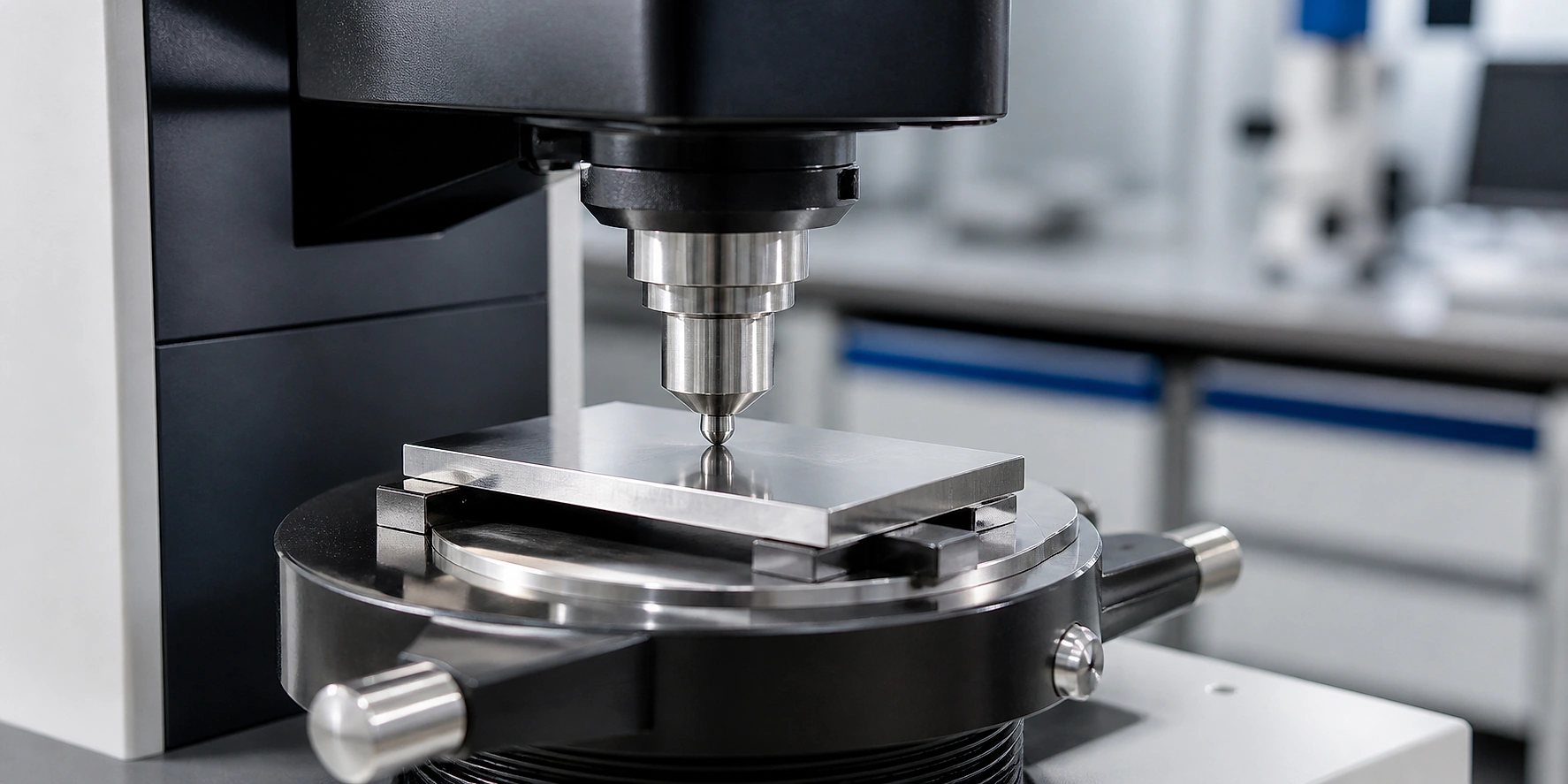
Hardness Test
Vickers, Rockwell, or Brinell hardness measurement confirms the material hardness falls within the specified range for the grade, verifying correct heat treatment and material properties throughout the tube.
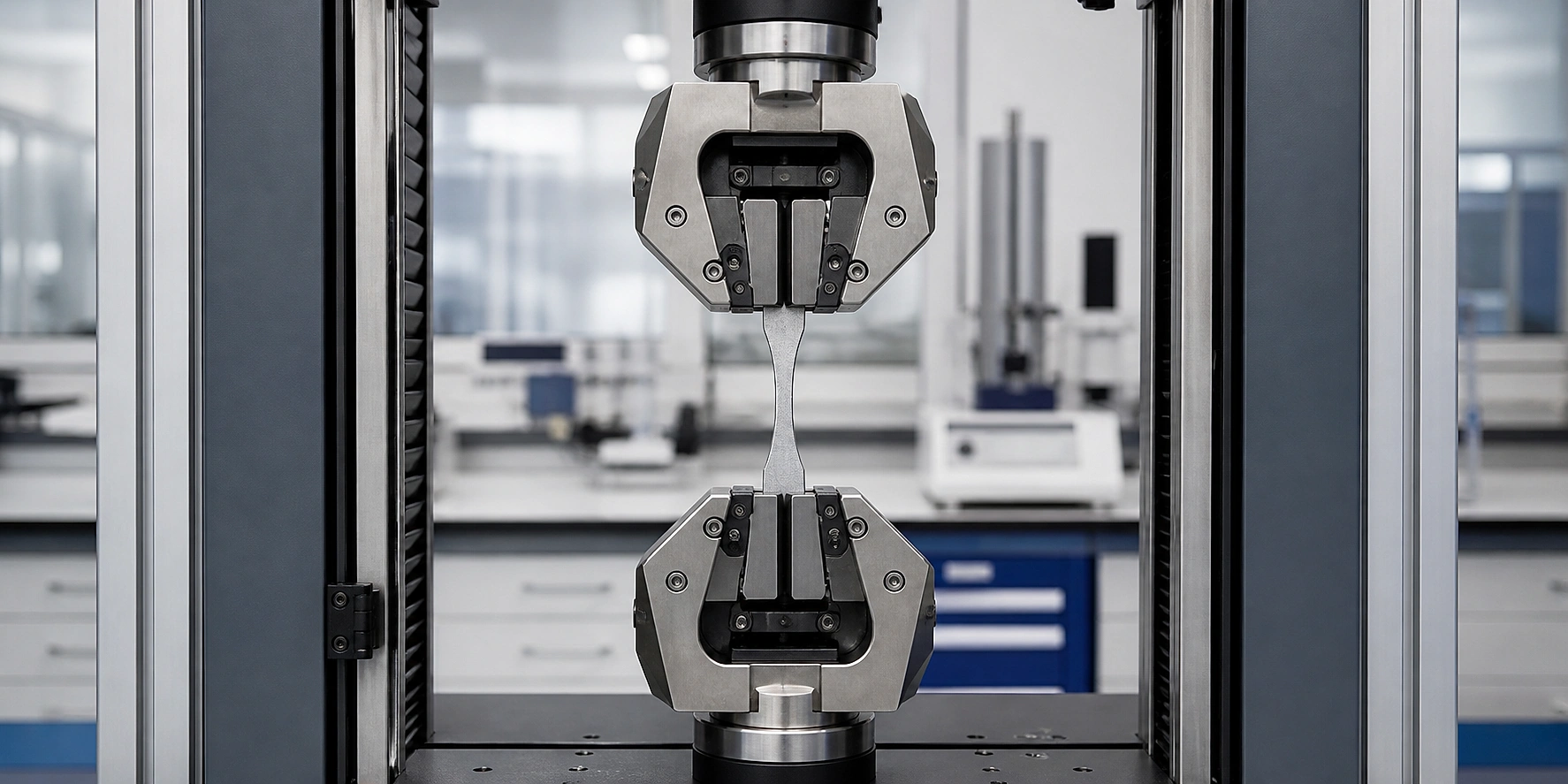
Tensile Test
Destructive tensile testing measures ultimate tensile strength (UTS), 0.2% proof/yield strength, and percentage elongation to verify compliance with ASTM, EN, or customer-specified mechanical property requirements.
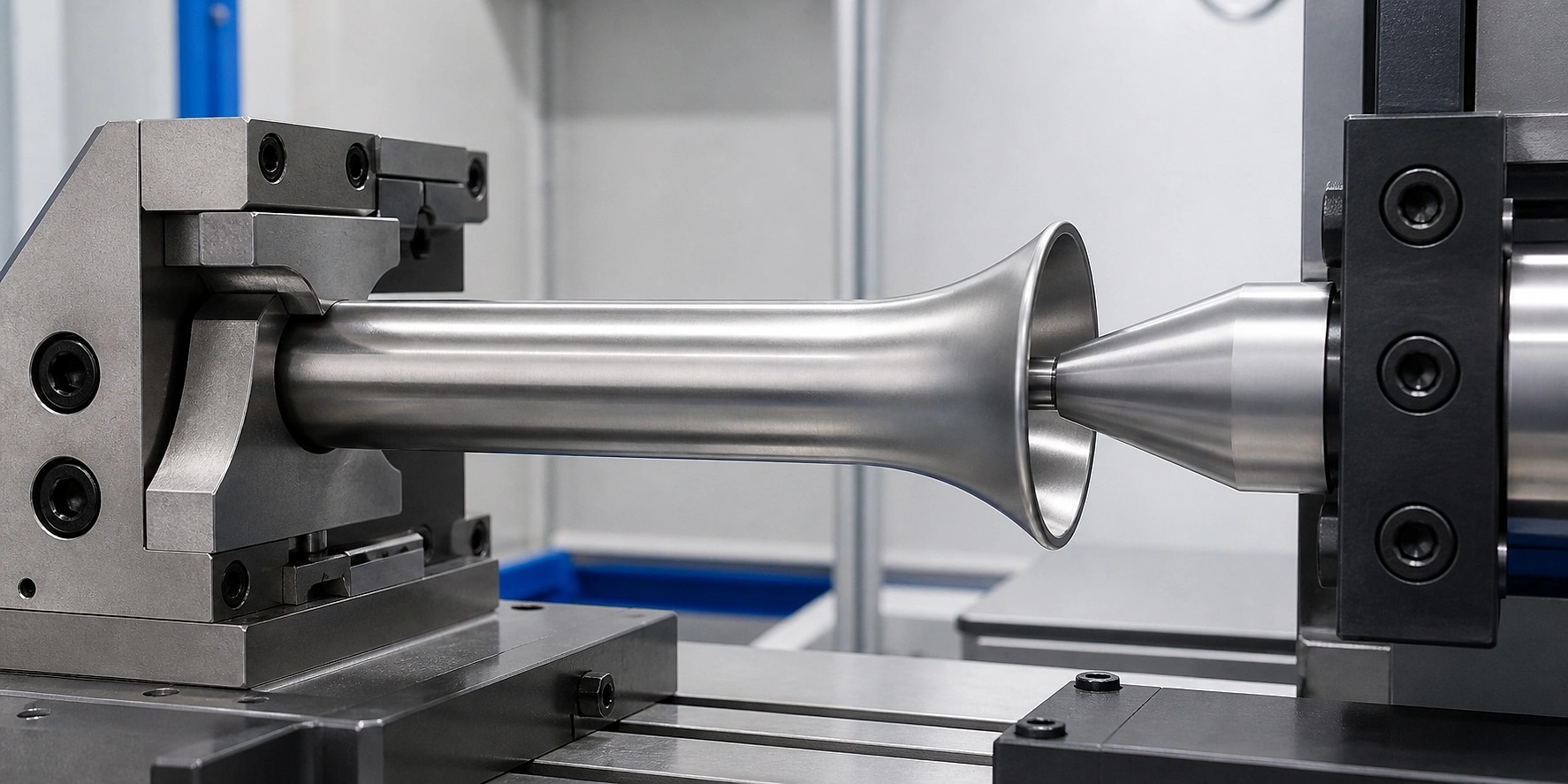
Flaring Test
The tube end is flared to a specified included angle without cracking or tearing, confirming sufficient material ductility for compression fitting assembly and tube end-forming operations.
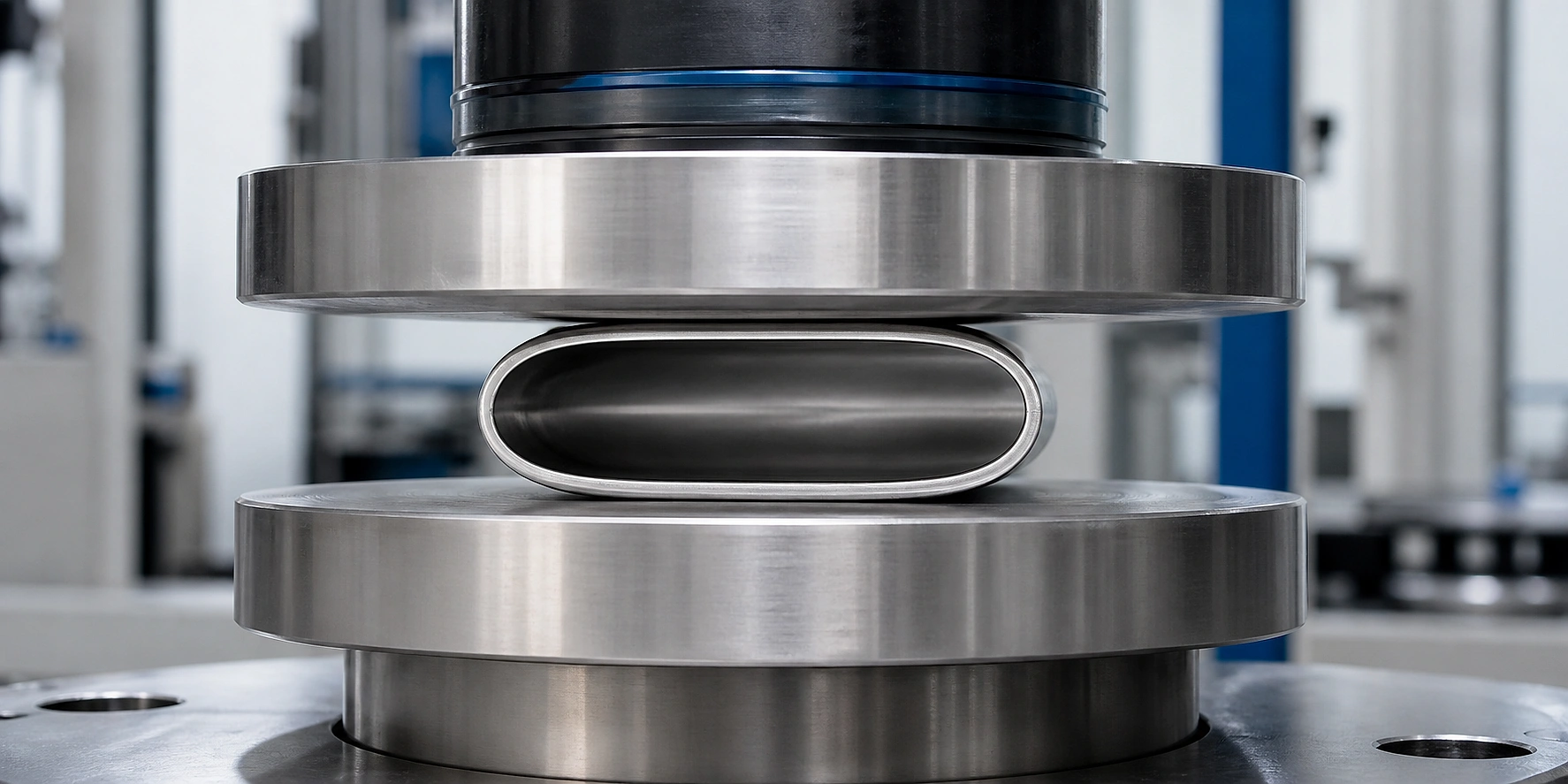
Flattening Test
A tube section is compressed between parallel platens until the walls meet. Acceptance requires no cracking through the specified compression depth, verifying weld integrity and material ductility.
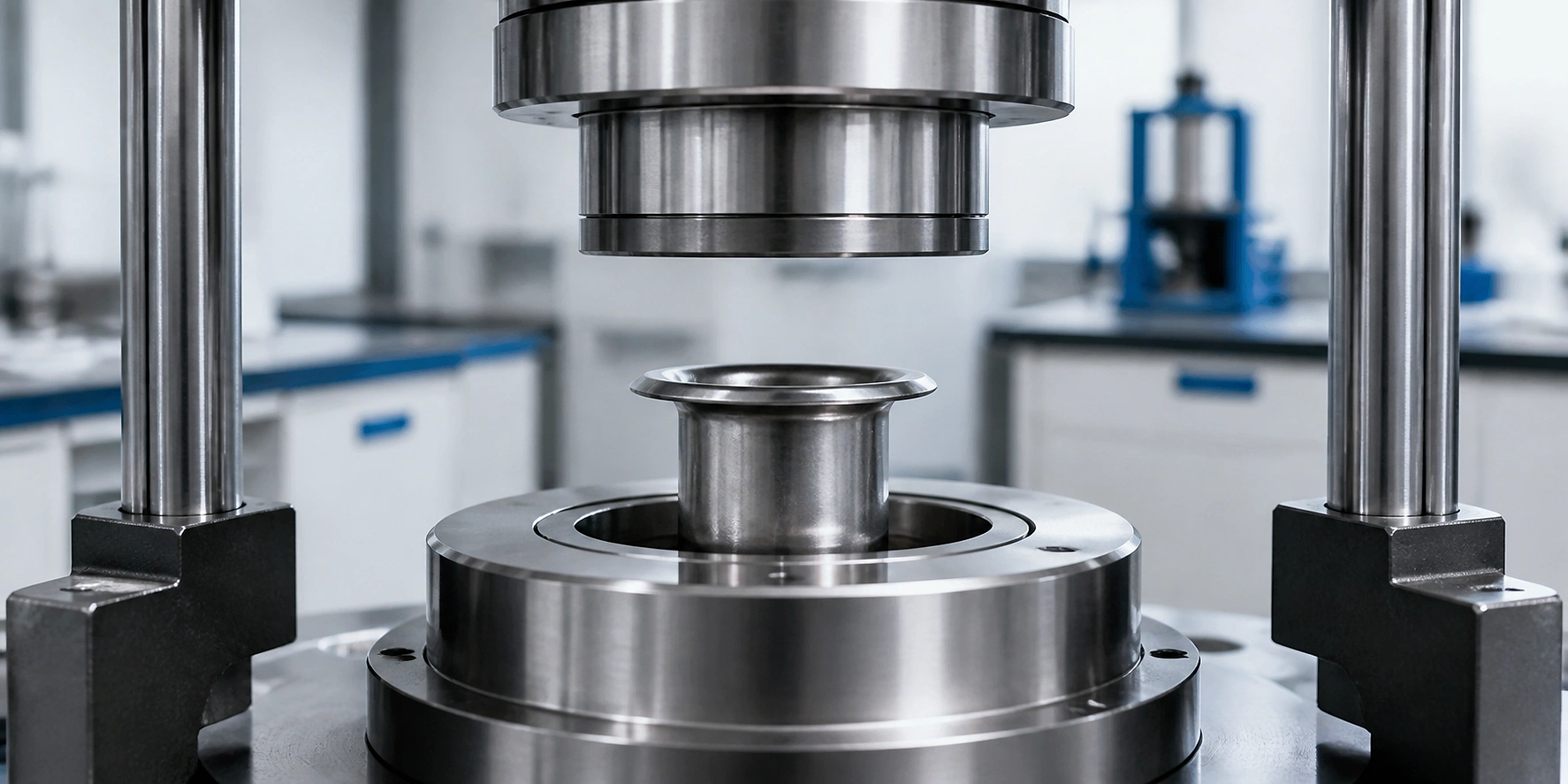
Flange Test
A short tube section is upset at the end to a specified outer diameter ratio without cracking. The test verifies the ductility and formability of tube material and weld seams under localized compressive deformation.
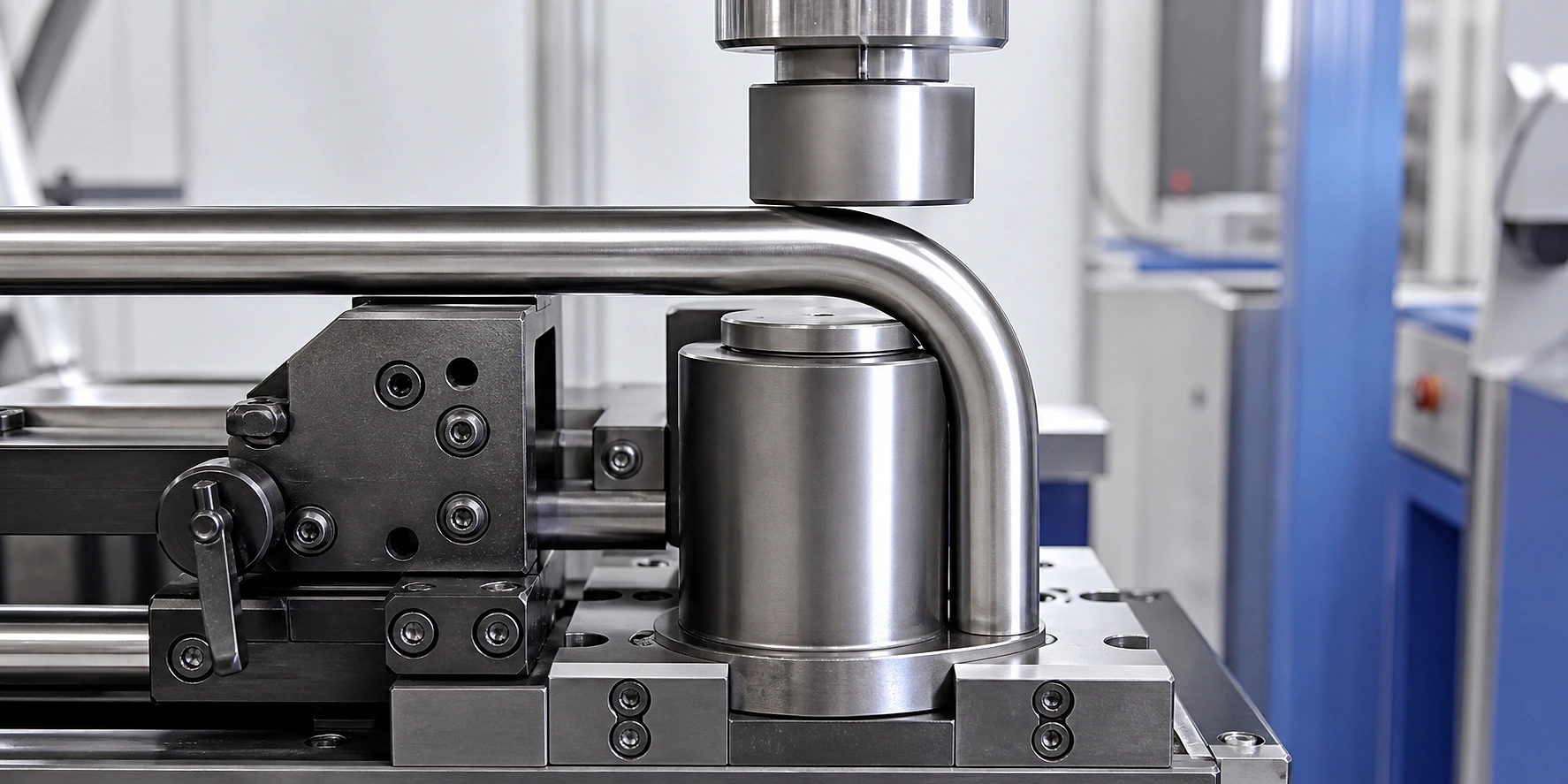
Bend Test
Tubes are bent through 90° over a specified mandrel radius. No cracks or injurious defects are permitted on the outer surface of the bend, confirming formability, weld soundness, and overall tube ductility.
Non-Destructive Tests
Advanced detection methods that thoroughly examine tubes for internal and external flaws without altering their structure or dimensions.
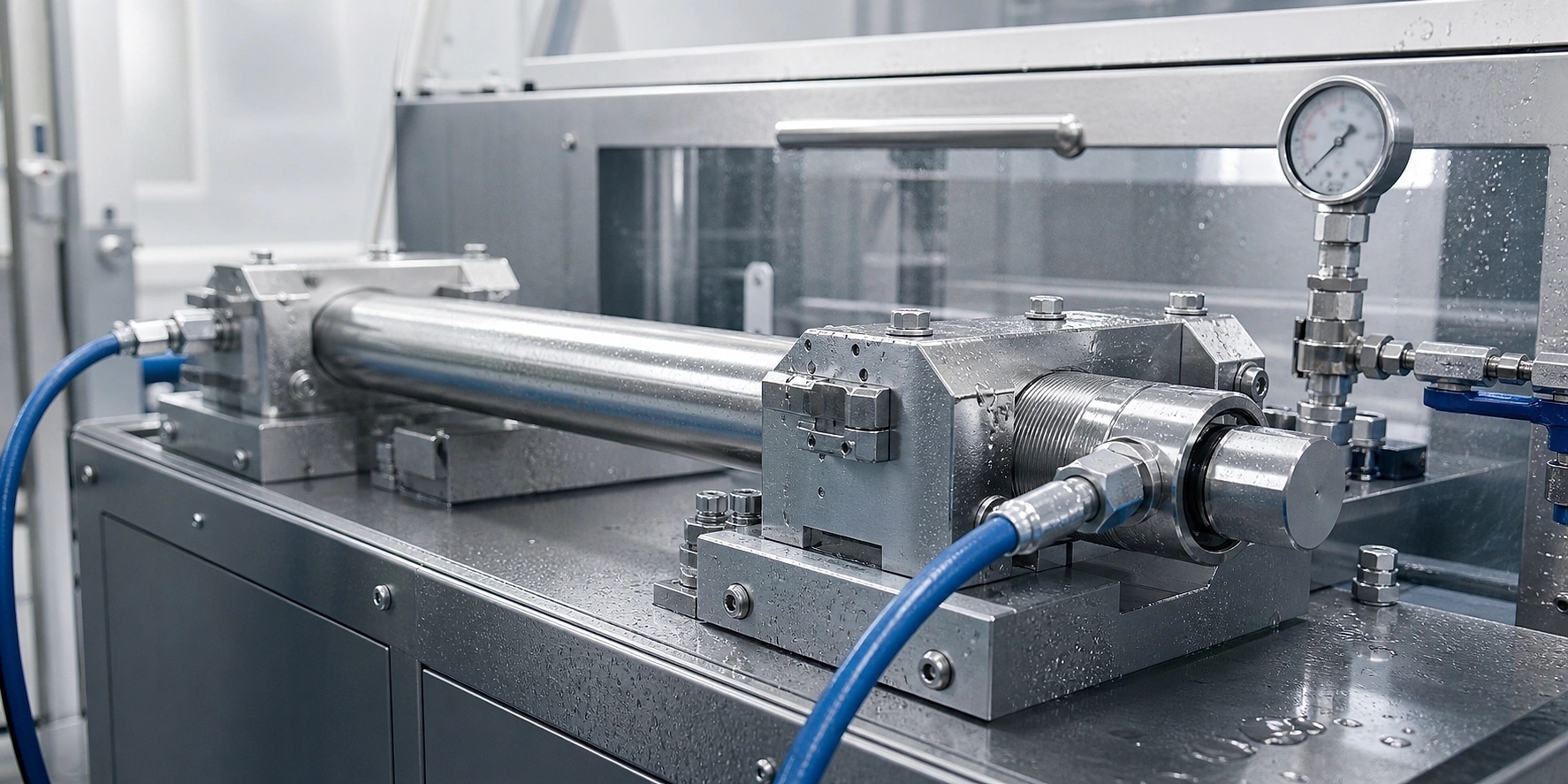
Hydrostatic Test
100% hydrostatic pressure testing fills each tube with water, applies the specified test pressure, and holds for a defined dwell time. Any leakage or permanent deformation constitutes failure and triggers rejection.
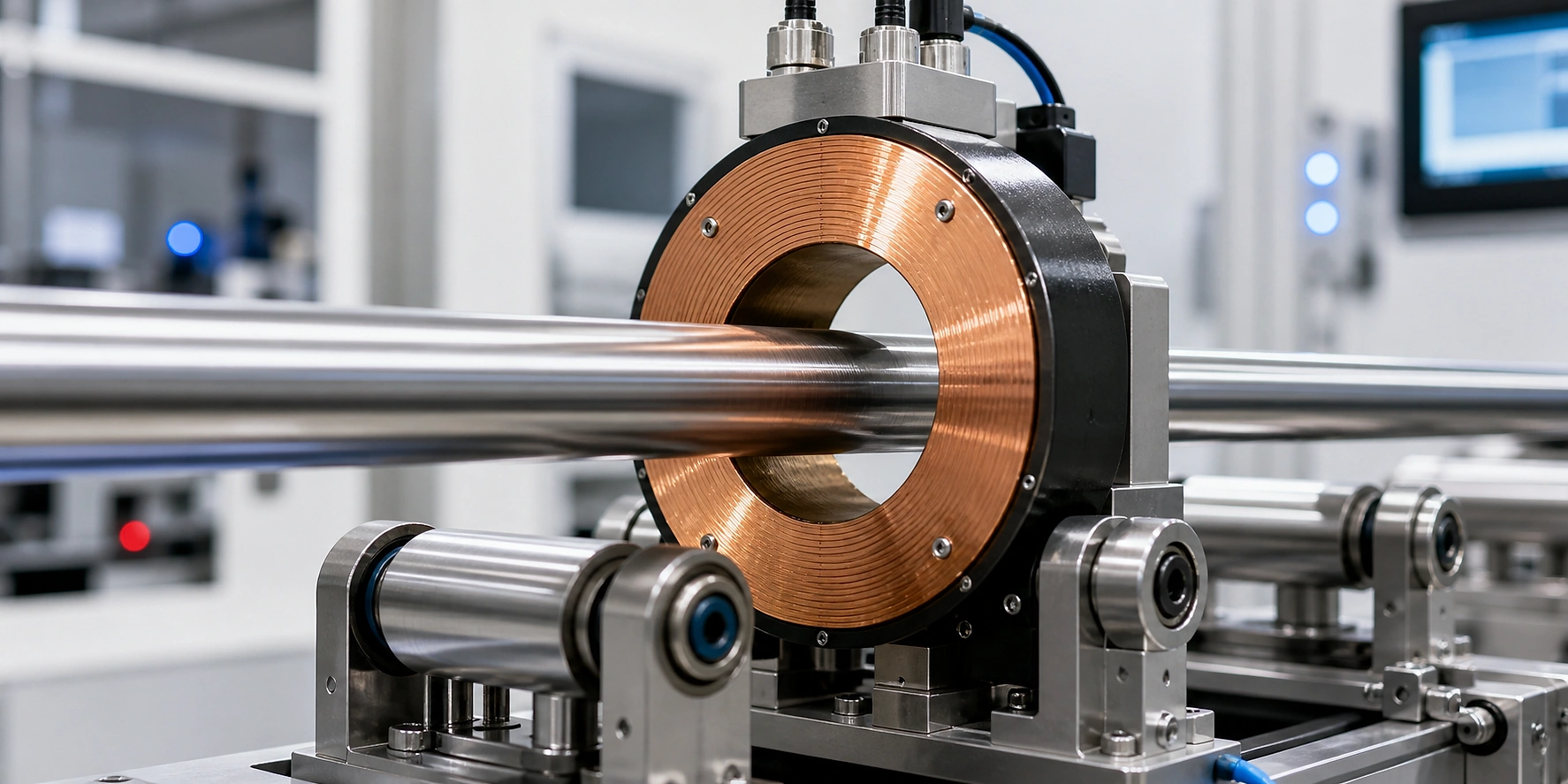
Eddy Current Test
Electromagnetic induction detects surface and near-surface discontinuities — including seam weld defects, laps, pits, and inclusions — from both the inside and outside surfaces simultaneously.
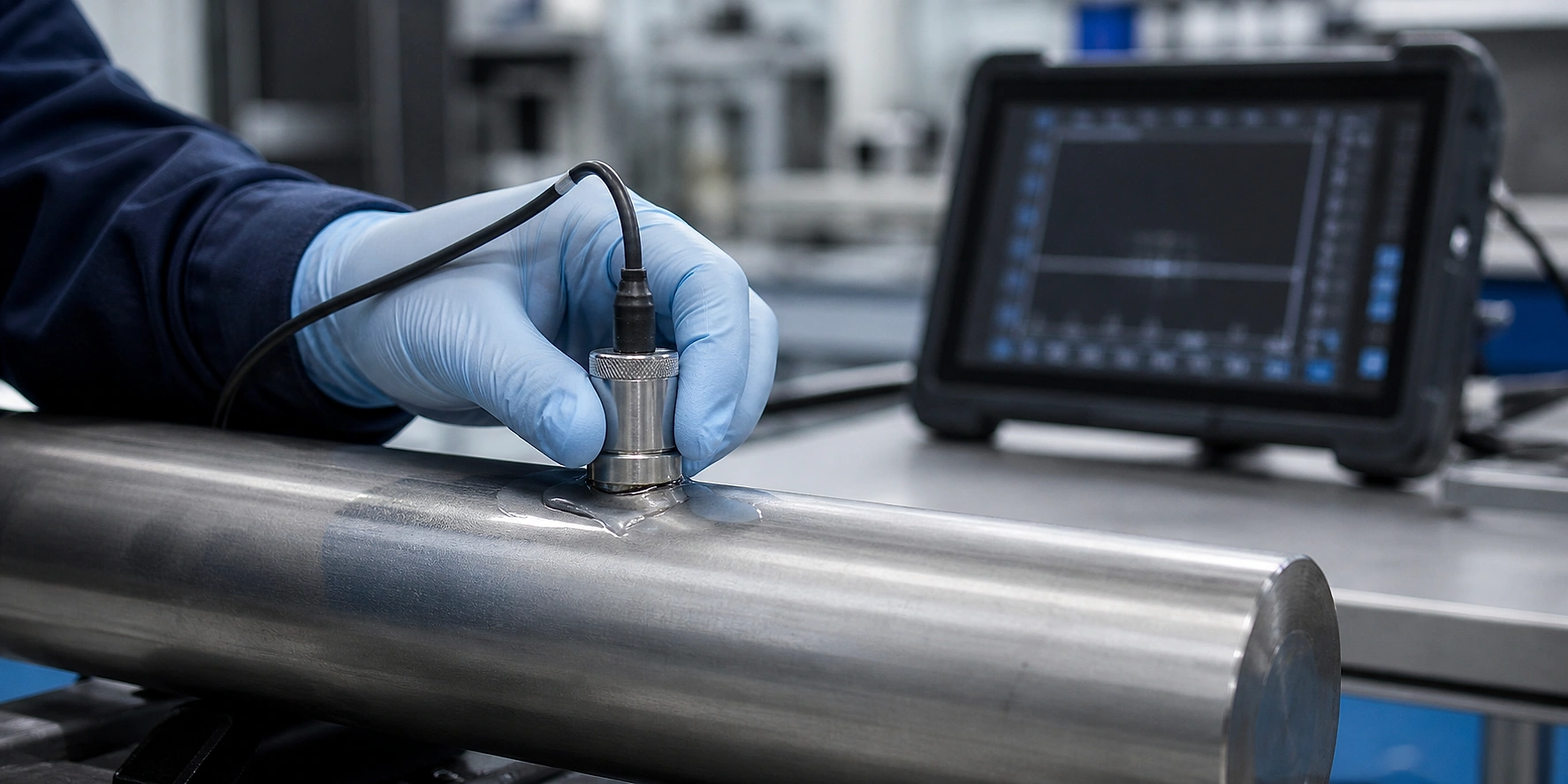
Ultrasonic Test
High-frequency sound waves penetrate the tube wall to detect internal laminations, inclusions, and sub-surface flaws in seamless and welded tubes, ensuring wall integrity across the full tube length.
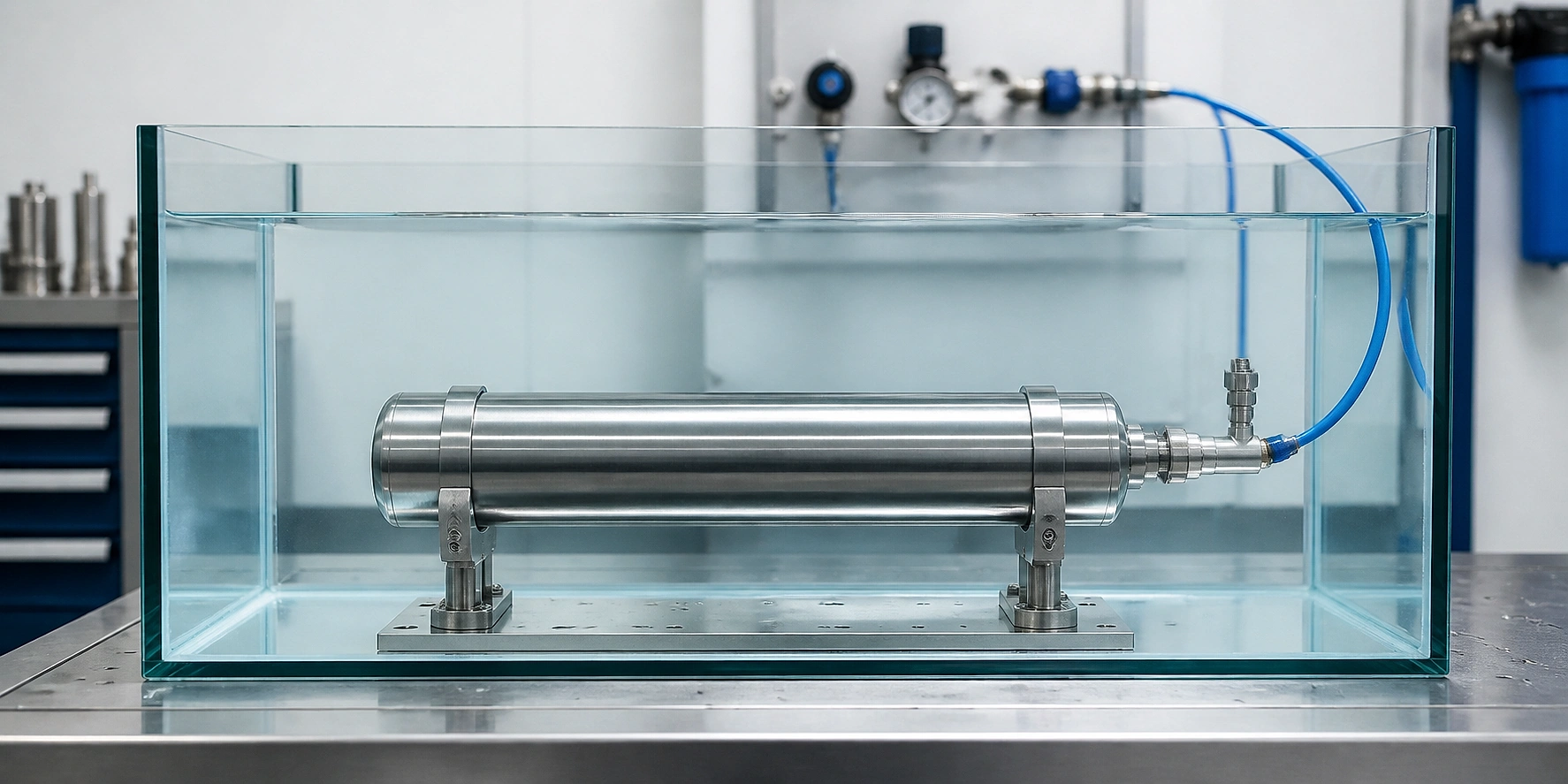
Air Under Water Test
Tubes are pressurized with air or inert gas and submerged in water. Bubble formation reveals any leak path, providing a highly sensitive detection method for micro-porosity, pinhole defects, and micro-cracks.
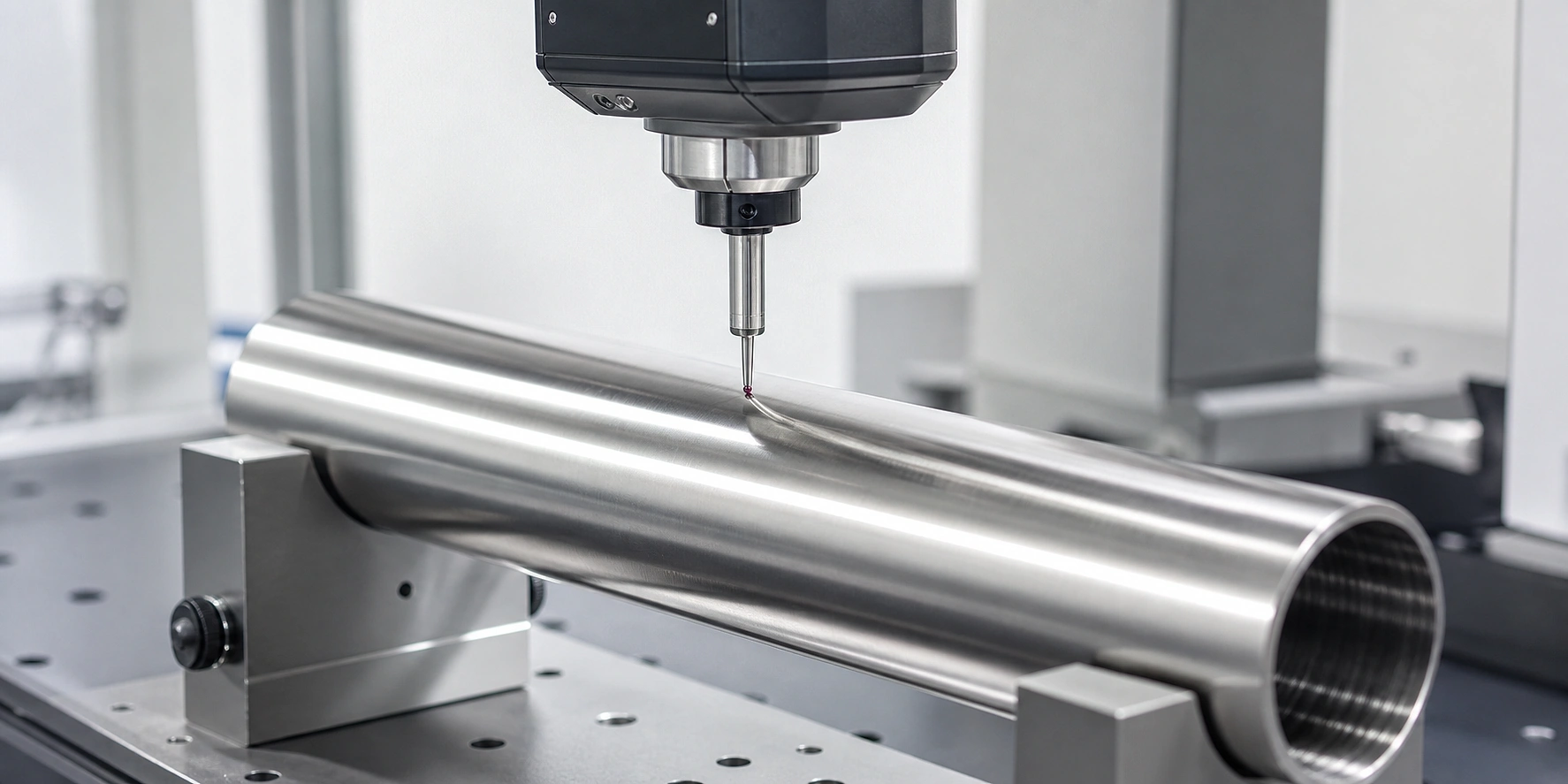
Roughness Test
Surface roughness (Ra) measurement via contact profilometry verifies that internal and external surface texture meets specifications for critical hydraulic, instrumentation, and fluid-carrying applications.
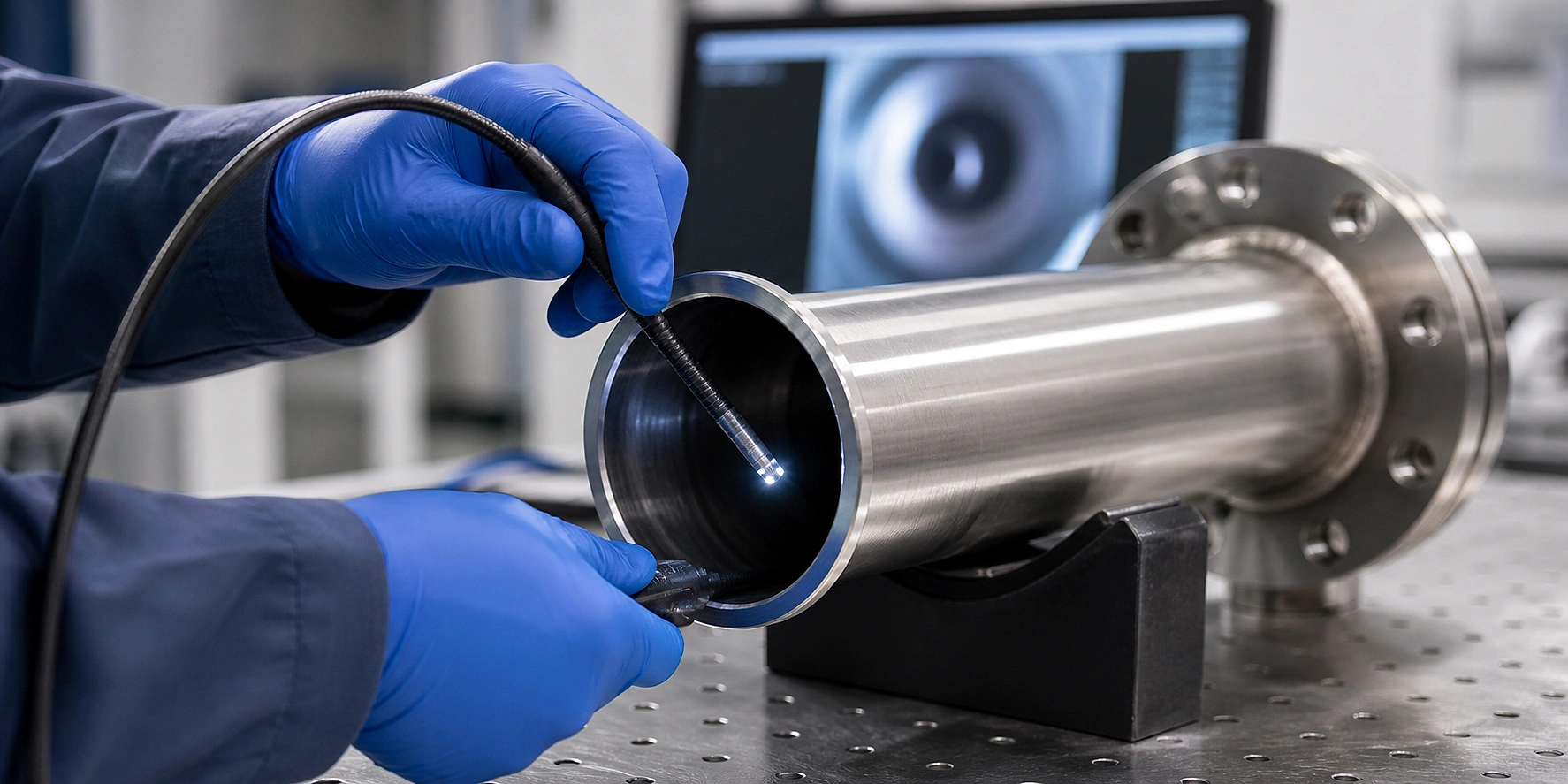
Boroscope Inspection
Flexible optical boroscope inspection of the tube bore identifies surface defects, pitting, weld bead irregularities, and internal surface conditions invisible to any external inspection method.
All 15 Tests Cleared
Valorex Global — Quality Test Report
Quality Control Tests
- Dimension Check
- Surface Inspection
- Chemical Analysis
Mechanical Tests
- Hardness Test
- Tensile Test
- Flaring Test
- Flattening Test
- Flange Test
- Bend Test
Non-Destructive Tests
- Hydrostatic Test
- Eddy Current Test
- Ultrasonic Test
- Air Under Water Test
- Roughness Test
- Boroscope Inspection
Why Our Testing Protocol Matters
Third-Party Inspection
All tests can be witnessed by TPI agencies including Bureau Veritas, SGS, Intertek, and Lloyd's Register. Mill test reports and certificates of conformity are issued with every shipment.
Full Material Traceability
Each product carries heat and lot traceability back to the raw material source. Chemical and mechanical test results are tied to specific heats so any batch can be fully audited.
Zero Compromise Policy
No batch passes on partial results. Every test in the protocol must be completed and passed. Non-conforming material is quarantined, documented, and returned to the mill — never shipped.
Need Certified Material?
Request mill test reports, third-party inspection certificates, or a full quality dossier for your next project. Our team responds within 24 hours.